1-866-731-1999
 Monday – Friday 8:00 am – 5:00 pm

Five connected moves that help district leaders turn classroom observation evidence into professional learning that changes practice

By Gary Hess
November 2026
How Can Districts Turn Teacher Evaluation Data into Meaningful Professional Development?
Districts turn teacher evaluation data, including observation evidence and performance ratings, into meaningful professional development when they calibrate observation evidence, diagnose systemwide patterns, build the capability educators need, and verify whether classroom practice changed.
A teacher observation tool helps collect evidence of instructional practice, and an evaluation system provides a framework for interpreting that evidence. Improvement occurs when districts use that information to inform professional learning, implementation, and instructional decisions.
Districts do not lack data about teaching and learning. The harder question is whether the data they already collect is connected well enough to improve instruction and inform the professional learning, implementation, and resource-allocation decisions leaders make every day.
I have seen school and district improvement plans built almost entirely around student achievement data while teacher evaluation data sits somewhere else in the system. I have seen professional development focus on teaching teachers more instructional strategies when the greater need was helping teachers plan more deliberately for student thinking. I have also seen teacher evaluation ratings that seemed difficult to reconcile with student learning evidence because observers were paying close attention to what teachers were doing without looking closely enough at what students were learning. Although the specific challenges differed, each district faced the same problem: evaluation data identified issues but did not automatically produce instructional improvement.
Districts can conduct observations, complete evaluations, provide professional development, implement instructional initiatives, and analyze student achievement data without those activities functioning as one improvement system. This raises an important question: if districts are collecting so much evaluation information, why does meaningful instructional change remain so difficult to achieve?
Research suggests that well-designed evaluation processes can contribute to improvement in teaching. Taylor and Tyler (2012), for example, found that teachers in Cincinnati became more productive in the years after participating in a structured evaluation process. But evaluation alone should not be confused with professional growth. Kraft and Christian (2022) found that evaluators could be perceived as trustworthy, fair, and accurate while still struggling to provide high-quality developmental feedback.
Five Steps to Turn Teacher Evaluation Data into Professional Development
Too often, districts treat observation, evaluation, professional learning, and student outcomes as separate activities. In my experience, the most effective improvement systems connect them through a deliberate process that moves from evidence to action.
I think about that work as five connected moves:
- Observe: Collect evidence about what students are experiencing.
- Calibrate: Build confidence in how evidence is interpreted.
- Prioritize: Identify patterns that deserve collective attention.
- Develop: Build the capability needed to change practice.
- Verify: Determine whether practice actually changed.
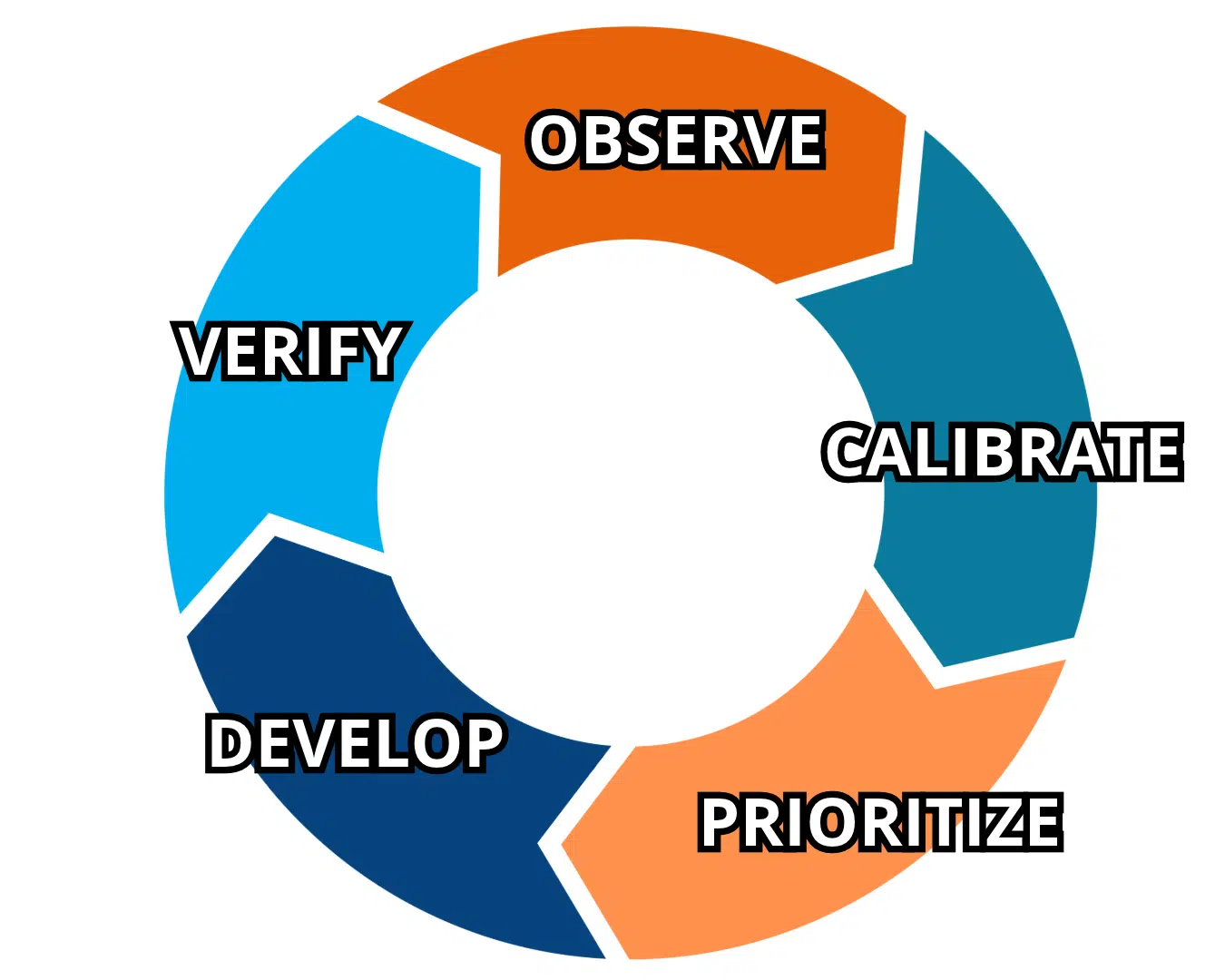
For district leaders, the value of teacher evaluation data lies not in the ratings themselves, but in a process for interpreting evidence, making decisions, and verifying results.
OBSERVE: What are students actually experiencing?
A teacher observation tool helps leaders understand what students are experiencing in classrooms, providing information that assessment results alone cannot. Assessment data tells us something about what students learned. Classroom observation allows leaders to examine the experiences producing that learning.
During an observation, it is relatively easy to become absorbed in what the teacher is doing. Is the teacher using the strategy? Is the learning target posted? Are students grouped appropriately? Is the teacher asking questions?
Those things matter, but effective observation also requires looking at the students.
What are they being asked to think about? How rigorous is the task? What evidence shows that they understand what they are learning? What are they producing that would allow the teacher, and the observer, to know whether learning is occurring?
When districts use a shared instructional framework such as the Marzano Focused Teacher Evaluation Model, that evidence can create a common language for examining instruction.
At the individual level, an evaluator needs to ask: What does this teacher need next?
At the school or district level, leaders need to ask: What are we learning about instruction across our classrooms?
That second question changes the purpose of the data and raises the stakes for its quality. If leaders are going to aggregate observation evidence, identify instructional priorities, and make professional development decisions, they first need confidence that the evidence means what they think it means. System-level conclusions depend on evidence leaders can trust.
CALIBRATE: Can leaders trust the evidence from their teacher observation tool?
Leaders can trust observation evidence only when evaluators interpret evidence consistently and apply performance criteria in similar ways.
A research-based framework does not automatically produce reliable observation data. Two administrators can enter the same classroom, watch the same lesson, and leave with different ratings. Observation requires professional judgment. The important question is what happens next.
In the Marzano Evaluation Center’s Side-By-Side Coaching process, leaders observe classrooms together, compare evidence and ratings, and discuss the reasoning behind their judgments to strengthen calibration.
Two questions can move the conversation away from simply comparing scores:
- Why did you score it that way?
- What evidence did you see to support that score?
Calibration is not about getting administrators to choose the same number. It is about strengthening the reasoning behind the number.
Research on classroom observation reinforces this concern. Hill, Charalambous, and Kraft (2012) argued that dependable observation scores require more than an observation instrument; the broader system includes the scoring design and processes for rater recruitment, training, and certification. In other words, a strong teacher observation tool alone does not make aggregated observation data dependable.
That becomes especially important when districts begin looking at aggregated evaluation data. Suppose one instructional element appears weaker than others across a school. That may represent a genuine professional learning need, but evaluators may also be interpreting the element differently, collecting different evidence, or applying rating distinctions differently.
When observation evidence is interpreted inconsistently, leaders risk directing professional development resources toward the wrong problems.
The same caution applies at the other end of the scale. If a very large proportion of observations are rated Innovating, leaders should not simply celebrate the result. They should ask what evidence is being collected to support those ratings.
Likewise, if ratings decline after evaluators deepen their understanding of the framework, that does not necessarily mean teaching has declined. Evaluators may apply the framework differently. A decline alone also does not prove that earlier ratings were inflated.
A dashboard can organize the numbers. It cannot determine whether the professional judgments behind those numbers are sound.
PRIORITIZE: What does the teacher evaluation data actually tell us?
Teacher evaluation data can help leaders identify what deserves attention across the system. Once leaders have greater confidence in the evidence, the next challenge is deciding what deserves attention.
One practice I have found useful is to begin by not looking at the teacher names. Instead, look at the distribution of ratings across all five Focused Teacher Evaluation Model performance levels (Beginning, Developing, Applying, Integrating, and Innovating) for individual elements across the school or district.
Where does a majority of the evidence fall at Developing or below? Where are unusually high concentrations of Innovating ratings? What evidence supports those ratings? Do the same patterns appear across schools, evaluators, or observation cycles? Are they consistent enough to warrant collective attention?
Removing the names temporarily shifts the conversation from individual performance to what the evidence may be telling leaders about instruction across the system.
But even a credible pattern is not yet a professional development plan. Identifying a pattern is not the same as diagnosing its cause.
This became particularly important in working with Crete Public Schools. One area of focus was taxonomy. The issue was not simply whether teachers knew instructional strategies associated with greater cognitive demand. The deeper questions were about planning. How were teachers designing tasks that became progressively more rigorous across a unit? How deliberately were instructional strategies requiring higher levels of student thinking being planned into those tasks?
If leaders conclude that teachers simply need more instructional strategies, professional development may focus on adding techniques to a teacher’s repertoire. But if the greater challenge is designing a progression of tasks that intentionally increases cognitive demand, the adult learning need is different.
The observation data helped identify where to look. Classroom evidence helped leaders understand the pattern more deeply. Professional judgment was still required before deciding what to do about it.
DEVELOP: What do educators need to perform differently?
Educators perform differently when they have opportunities to learn, practice, receive feedback, and refine their work over time.
Once leaders identify a meaningful instructional need, there is a temptation to move directly to the professional development calendar. But identifying a topic is not the same as building capability.
Building capability means helping educators turn that understanding into consistent practice. When the work requires people to perform differently over time, across roles, teams, and changing conditions, the challenge becomes capability building.
That requires more than content delivery. Educators need clear expectations, opportunities to practice, coaching, feedback, peer learning, implementation evidence, and leadership routines that keep the work visible.
I have seen this repeatedly in school and organizational improvement work: strategy does not become practice simply because people have been trained. It becomes practice when the organization builds the conditions for people to apply, refine, and sustain new ways of working.
Research helps explain why. Darling-Hammond, Hyler, and Gardner (2017) identified recurring features in effective professional development, including content focus, active learning, collaboration, modeling, coaching, feedback and reflection, and sustained duration. Kraft, Blazar, and Hogan’s (2018) meta-analysis of 60 causal studies found positive effects of teacher coaching on instruction and student achievement, while also finding smaller effects in larger effectiveness trials.
A workshop on formative assessment is not evidence that formative assessment practice will change. Teachers need to understand the practice, try it, receive feedback, examine evidence, and refine what they are doing. Leaders need to know what implementation should look like and continue paying attention after the professional development session ends.
Building capability also requires the parts of an evaluation and improvement system to perform different jobs. Frameworks and platforms support this work but don’t replace it. The Focused Teacher Evaluation Model provides a shared instructional language, and iObservation provides infrastructure for collecting, organizing, and examining evidence. Marzano Evaluation Center faculty help leaders move between the stages of the improvement cycle by strengthening observation practice, interpreting evidence, designing learning responses, and verifying implementation.
VERIFY: Did practice actually change?
Leaders can determine whether practice has changed only when they examine implementation evidence and whether students are experiencing the intended change.
Too many professional development cycles end with attendance. The session occurred, teachers participated, participant feedback was positive, and the calendar moves to the next topic.
But attendance tells leaders little about implementation.
Did teachers understand what they were expected to do differently? Did they have an opportunity to practice it? Did it begin appearing in classrooms? Did the quality of implementation improve? Did students experience something different as a result?
Return to classrooms. Examine new observation evidence, student work, and assessment information. Determine whether the practice is becoming more consistent and whether students are experiencing the intended change.
The evidence may call for continued support, additional coaching or feedback, or an adjustment to the original strategy.
And sometimes what appears to be a teacher implementation problem is actually a system problem.
I have seen organizations introduce a new instructional expectation and later describe implementation as inconsistent. But when the system is examined more closely, teachers may be receiving one message in professional development, another through walkthrough feedback, another in team meetings, and another through the school improvement plan.
Increasing pressure on teachers is unlikely to solve that problem. The leadership work is to reduce the noise, clarify the priority, align professional learning and feedback, determine what evidence everyone will examine, and create the conditions for people to practice and improve.
What was clear? What was practiced? What support was available? What feedback did teachers receive? What competing priorities were operating? Verification should help leaders decide what the evidence calls for next. Then the cycle begins again.
What Did Closing the Loop Look Like at Crete Public Schools?
At Crete Public Schools, closing the loop meant moving continuously between evaluation evidence, classroom observation, professional learning, and implementation verification before making decisions.
Before visiting classrooms, iObservation data was examined for trends. That created hypotheses, not conclusions.
The Marzano Evaluation Center partnership then brought Marzano Evaluation Center faculty and administrators together for joint classroom observations and Side-By-Side Coaching using the Focused Teacher Evaluation Model. Together, they examined the evidence supporting performance ratings, strengthened consistency in interpreting the model’s criteria, and looked more closely at what students were actually being asked to think about and do.
Those observations helped administrators determine whether patterns in the evaluation evidence were visible in classroom practice and what those patterns suggested about instructional needs.
The work moved beyond identifying instructional strategies toward examining the quality of instructional planning. An important priority involved helping teachers design standards-aligned learning experiences that deliberately increased cognitive rigor through clearer learning targets, progressions, formative assessment, and increasingly challenging student tasks.
Evaluation evidence informed professional learning priorities, while leadership coaching helped administrators connect those priorities to teacher feedback and classroom implementation. Subsequent observations provided evidence that instructional planning and teaching practices were changing.
The important lesson was not simply that administrators became more consistent in using an evaluation instrument. It was that evaluation evidence, professional learning, coaching, implementation, and follow-up observation became part of a more coherent instructional improvement process.
Close the Loop: Is Your Teacher Observation Tool Driving Instructional Improvement?
For superintendents and district leaders, improving this process may not require another initiative. It may require connecting work that already exists: teacher evaluation, professional development, instructional coaching, school improvement planning, classroom observation, and student assessment.
The question is not whether those activities exist. The question is whether they function as one improvement system.
If observation evidence is not informing professional learning, if professional learning is not changing classroom practice, or if implementation is not being verified, the improvement loop remains open.
The purpose of teacher evaluation data should not end with completing an evaluation. Its value comes from helping leaders make better decisions about instruction, professional learning, implementation, and continuous improvement.
The Marzano Focused Teacher Evaluation Model provides a shared language for examining instruction, and iObservation provides infrastructure for collecting and examining evidence. But neither a framework nor a platform can replace the professional judgment required to interpret evidence, support implementation, and verify progress.
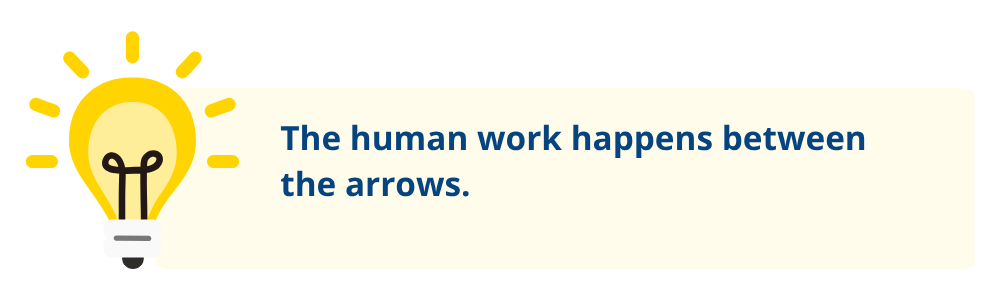
It happens when an administrator is asked, “Why did you score it that way? What evidence did you see?” It happens when leaders resist turning the lowest rating into the next professional development topic, when classroom evidence changes the diagnosis. It happens when leaders return after professional learning and ask not whether the training occurred, but whether implementation is becoming more consistent and whether students are experiencing the intended change.
District leaders may want to ask:
- Are observation ratings being interpreted consistently across schools and evaluators?
- Can we explain why instructional priorities were selected?
- Is professional learning aligned to diagnosed causes rather than symptoms?
- Are we returning to classrooms to verify implementation and monitor progress?
If these questions are difficult to answer, the improvement loop may still be open.
If your district is working to strengthen the connection between teacher evaluation, professional learning, and instructional improvement, the Marzano Evaluation Center can help leaders examine where that improvement loop is strong, where it remains open, and what support may help close it.
Contact us to explore how a connected evaluation and improvement system can help turn evidence into action.
Frequently Asked Questions
How can districts turn teacher evaluation data into professional development?
Districts turn teacher evaluation data into meaningful professional development when they calibrate observation evidence, diagnose systemwide patterns, build the capability educators need, and verify whether classroom practice changed. The five connected moves are Observe, Calibrate, Prioritize, Develop, and Verify.
What is the role of a teacher observation tool in instructional improvement?
A teacher observation tool helps leaders collect evidence about what students are experiencing in classrooms, which assessment results alone cannot show. Improvement happens when districts use that evidence to inform professional learning, implementation, and instructional decisions.
What is calibration in teacher evaluation?
Calibration builds confidence that evaluators interpret evidence consistently and apply performance criteria in similar ways. It is not about getting administrators to choose the same number; it is about strengthening the reasoning behind the number.
Should the lowest-rated element become the next professional development topic?
Not automatically. A low rating may reflect a genuine learning need, but evaluators may also be interpreting the element differently. Identifying a pattern is not the same as diagnosing its cause, so leaders should examine classroom evidence before deciding what professional learning is needed.
How do leaders know whether professional development changed practice?
Attendance tells leaders little about implementation. Leaders should return to classrooms and examine new observation evidence, student work, and assessment information to determine whether the practice is becoming more consistent and whether students are experiencing the intended change.
About the Author
Gary Hess is an educator, leadership coach, and Marzano Evaluation Center faculty member whose work focuses on helping school and district leaders connect instructional evidence, leadership development, professional learning, and implementation to create sustainable improvement.
References
Darling-Hammond, L., Hyler, M. E., & Gardner, M. (2017). Effective teacher professional development. Learning Policy Institute. https://doi.org/10.54300/122.311
Hill, H. C., Charalambous, C. Y., & Kraft, M. A. (2012). When rater reliability is not enough: Teacher observation systems and a case for the generalizability study. Educational Researcher, 41(2), 56–64. https://doi.org/10.3102/0013189X12437203
Kraft, M. A., Blazar, D., & Hogan, D. (2018). The effect of teacher coaching on instruction and achievement: A meta-analysis of the causal evidence. Review of Educational Research, 88(4), 547–588. https://doi.org/10.3102/0034654318759268
Kraft, M. A., & Christian, A. (2022). Can teacher evaluation systems produce high-quality feedback? An administrator training field experiment. American Educational Research Journal, 59(3), 500–537. https://doi.org/10.3102/00028312211024603
Taylor, E. S., & Tyler, J. H. (2012). The effect of evaluation on teacher performance. American Economic Review, 102(7), 3628–3651. https://doi.org/10.1257/aer.102.7.3628